
ASTM A193 Grade B7 stud bolts and 2H nuts
A widely used flange stud for refinery, petrochemical and utility piping: chromium-molybdenum alloy steel studs, quenched and tempered, cut and threaded to length in Al Jubail and supplied with A194 2H heavy hex nuts.
ASTM A193 Grade B7 is a quenched and tempered chromium-molybdenum alloy steel stud, a widely used bolting grade for ASME B16.5 and B16.47 flanges. It is made from 4140, 4142 or 4145 type steel and has a minimum tensile strength of 125 ksi up to 2 1/2 in. diameter. B7 studs are paired with A194 Grade 2H heavy hex nuts. For sour (wet H2S) service the hardness-limited B7M grade with 2HM nuts is used instead.
- Standard
- ASTM A193/A193M (latest edition), Grade B7
- Material
- Cr-Mo alloy steel, AISI 4140/4142/4145 type, quenched and tempered
- Nuts
- ASTM A194 Grade 2H heavy hex; 2HM with B7M for sour service
- Sizes
- 1/2 to 4 in. and larger to order; M12 to M100 metric
- Threads
- UNC up to 1 in., 8UN above 1 in.; metric coarse or fine
- Finish
- Plain, hot-dip galvanized, zinc plated or PTFE (fluoropolymer) coated
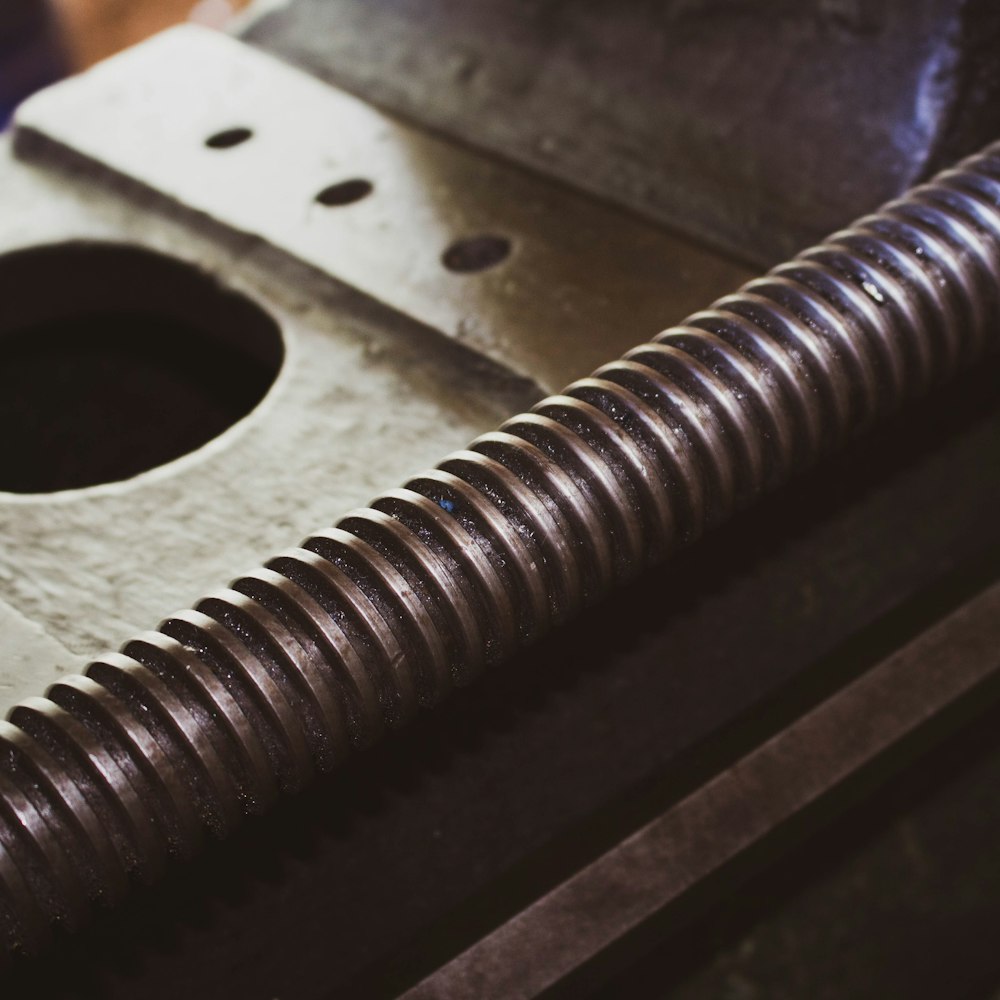
What we supply
- Flange stud bolts
- Full-thread studs with two 2H nuts, cut to the B16.5 length
- Double-end and tap-end
- Studs threaded each end to drawing
- Threaded bar
- B7 bar in 3 m or 12 ft lengths
- Kits
- Studs, nuts and washers packed per flange
B7 mechanical properties by diameter
B7 strength falls as diameter rises, because large bars do not harden as deeply. All sizes are tempered at 593 °C (1100 °F) minimum.
| Diameter | Tensile min | Yield min (0.2%) | Elongation min | Reduction of area min |
|---|---|---|---|---|
| Up to 2 1/2 in. (M64) | 125 ksi (860 MPa) | 105 ksi (720 MPa) | 16% | 50% |
| Over 2 1/2 to 4 in. (M100) | 115 ksi (795 MPa) | 95 ksi (655 MPa) | 16% | 50% |
| Over 4 to 7 in. (M180) | 100 ksi (690 MPa) | 75 ksi (515 MPa) | 18% | 50% |
Values summarised from ASTM A193 as published by bolting manufacturers (MPa values approximate). Maximum hardness up to 2 1/2 in. is 321 HBW (35 HRC); confirm the limit for larger diameters against the purchased standard. B7 has no minimum hardness.
B7, B7M or L7?
The three grades use the same Cr-Mo steel (B7M may also be slightly lower in carbon). What changes is the heat treatment, the hardness limit, the strength and the testing.
| Grade | Nut | Key difference | Typical service |
|---|---|---|---|
| A193 B7 | A194 2H | Full strength, 35 HRC max | General process, steam and utility flanges |
| A193 B7M | A194 2HM | Lower strength (100 ksi), max 235 HBW (99 HRB), every stud hardness tested | Wet sour (H2S) service |
| A320 L7 | A194 4 or 7 | Charpy impact tested at low temperature | Cold service below about -29 °C |
Saudi Arabia requirements for B7 stud bolts
Saudi Aramco selects flange bolting in SAES-L-109. The points below are from an unofficial copy of the 2018 issue; we supply to the revision named in your purchase order.
| Requirement | What it means for the order |
|---|---|
| Bolting selection | Flange bolting is selected to ASME B16.5 or B16.47 as a minimum, with materials from Table 5. |
| General service | Table 5 lists A193 B7 studs with A194 2H nuts. |
| Wet sour service | B7M studs with 2HM nuts where bolting is, or may be, exposed to the sour fluid (for example buried, insulated or shielded flanges). |
| Offshore and underground | Bolting in aggressive environments is protected, for example by ceramic-fluoropolymer coating to 09-SAMSS-107. |
Based on an unofficial copy of SAES-L-109 (29 January 2018), which may be superseded; confirm against the current revision in your project specification. Your line class is the final word.
Where B7 stud bolts are used
B7 is the usual stud for general-service carbon and low-alloy steel flanges.
Process piping
ASME B16.5 flanges Class 150 to 2500 and B16.47 large-diameter flanges.
Equipment
Pump, compressor and exchanger nozzles.
Valves
Body-bonnet joints and flanged valve ends.
Coated studs
PTFE coated or galvanized studs for coastal plants.
Shutdowns
Studs and nuts packed and tagged per joint.
Threaded bar
B7 rod for site cutting and anchor use.
Cut and threaded in Al Jubail
Most flange studs are cut from certified B7 bar and threaded to the length the joint needs.
- Lengths to ASME B16.5 tables
- Rolled or cut threads
- Grade and maker marking
- 2H nuts certified to A194
- Cut to the lengths your joints need
Documents with every order
Bar heat numbers are traced through to the finished studs.
- EN 10204 3.1 MTC
- Heat treatment record
- Hardness test results
- Coating certificate if coated
- 3.2 with third-party inspection
B7 stud bolt questions
Which nut goes with a B7 stud bolt?
ASTM A194 Grade 2H heavy hex nuts. For B7M studs in sour service, use 2HM nuts.
What is the difference between B7 and B7M?
B7M is made from the same Cr-Mo steel family but is tempered higher (1150 °F min), limited to 235 HBW (99 HRB) with every stud hardness tested, and has lower strength (100 ksi tensile, 80 ksi yield up to 4 in.). It is used with 2HM nuts where sour service needs NACE MR0175/ISO 15156 hardness limits. B7 allows up to 35 HRC.
Can B7 stud bolts be used in sour service?
No. B7 can be harder than sour service limits allow. Use B7M studs with 2HM nuts.
Can B7 studs be hot-dip galvanized?
Yes. B7 is tempered at 593 °C (1100 °F) minimum, above the galvanizing bath temperature, and galvanized nuts are tapped oversize. A193 allows coatings only when the buyer specifies them.
What temperature range is B7 good for?
ASTM A193 does not set one: limits come from the design code and project specification. For cold service below about -29 °C, A320 L7 or L7M studs are specified instead.
Updated
Related
A194 2H heavy hex nuts
The matching nut for B7 studs.
PTFE coated stud bolts
Fluoropolymer coated B7 studs.
Tap-end studs
Studs for tapped holes in valve and pump bodies.
Send your stud bolt list
Diameter, length and quantity per flange are enough: we quote B7 studs and 2H nuts promptly.